MAHABALIPURAM (UNESCO #249)
A day-trip from Chennai: Shore Temple, Cave Temples, and Five Rathas by private taxi
The group of sanctuaries at Mahabalipuram was founded by the Pallava kings and carved from rock along the Coromandel coast during the 7th and 8th centuries. The site is renowned for its architectural and sculptural achievements: rathas (monolithic temples shaped like chariots), mandapas (open-air pavilions and cave sanctuaries), and colossal open-air reliefs such as the famous Descent of the Ganges. The complex also includes the Rivage Temple and thousands of sculptural details devoted to Shiva and the broader Shaivite tradition. The entire site represents a masterclass in late-classical Indian rock-carving and remains one of the most important Pallava heritage zones in southern India.
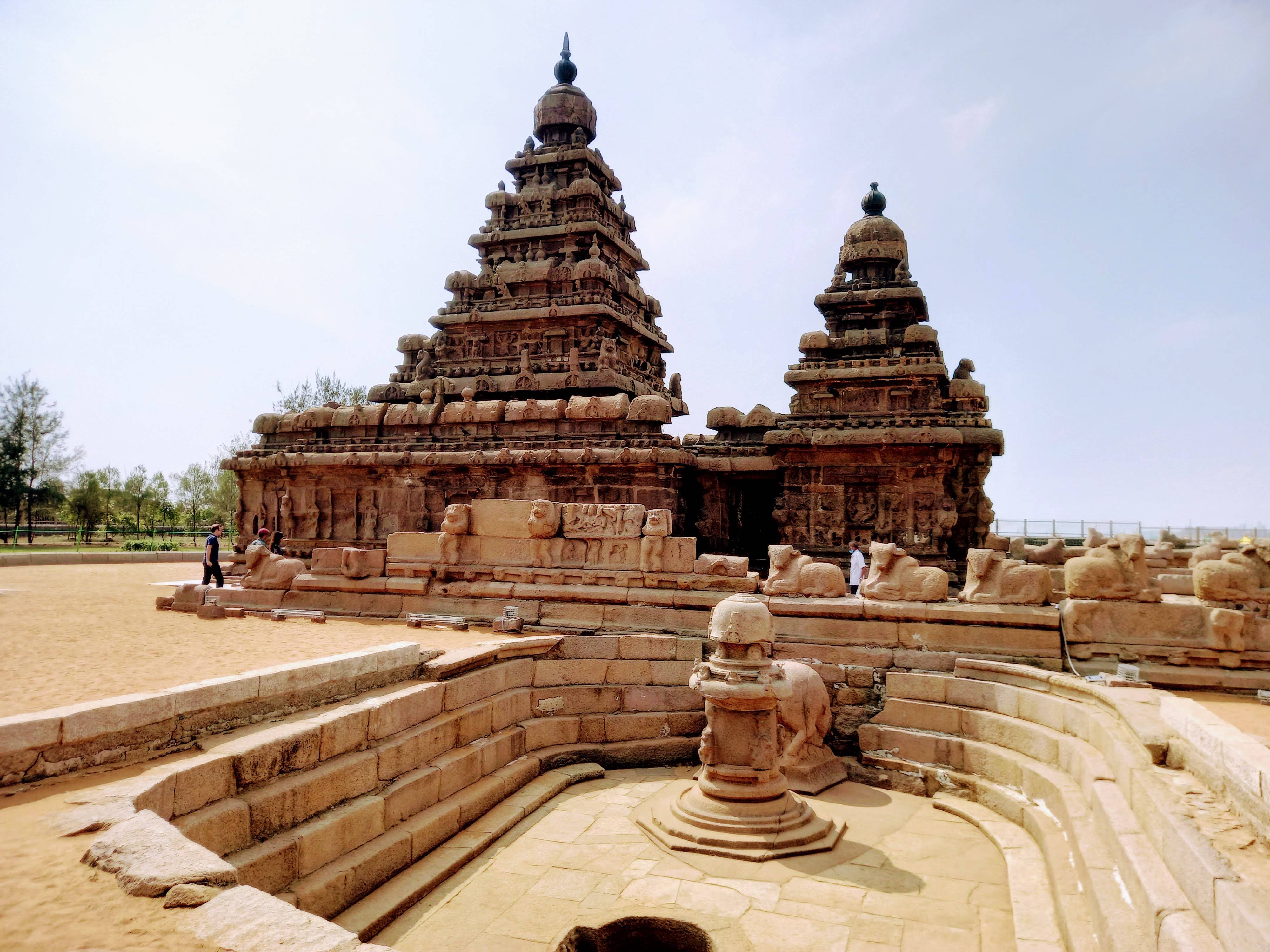
The Shore Temple stands prominently at the edge of the Bay of Bengal, making it the most iconic single structure at Mahabalipuram. It is a relatively compact but finely detailed sanctuary, and its oceanside position offers a striking visual contrast with the surrounding landscape.
Upon arrival at the complex, the Shore Temple is often the first landmark visitors encounter. Its accessibility and dramatic setting make it an excellent opening point for exploring the full monument group. The site integrates both Shaivite and Vaishnava elements, reflecting the syncretic Pallava approach.
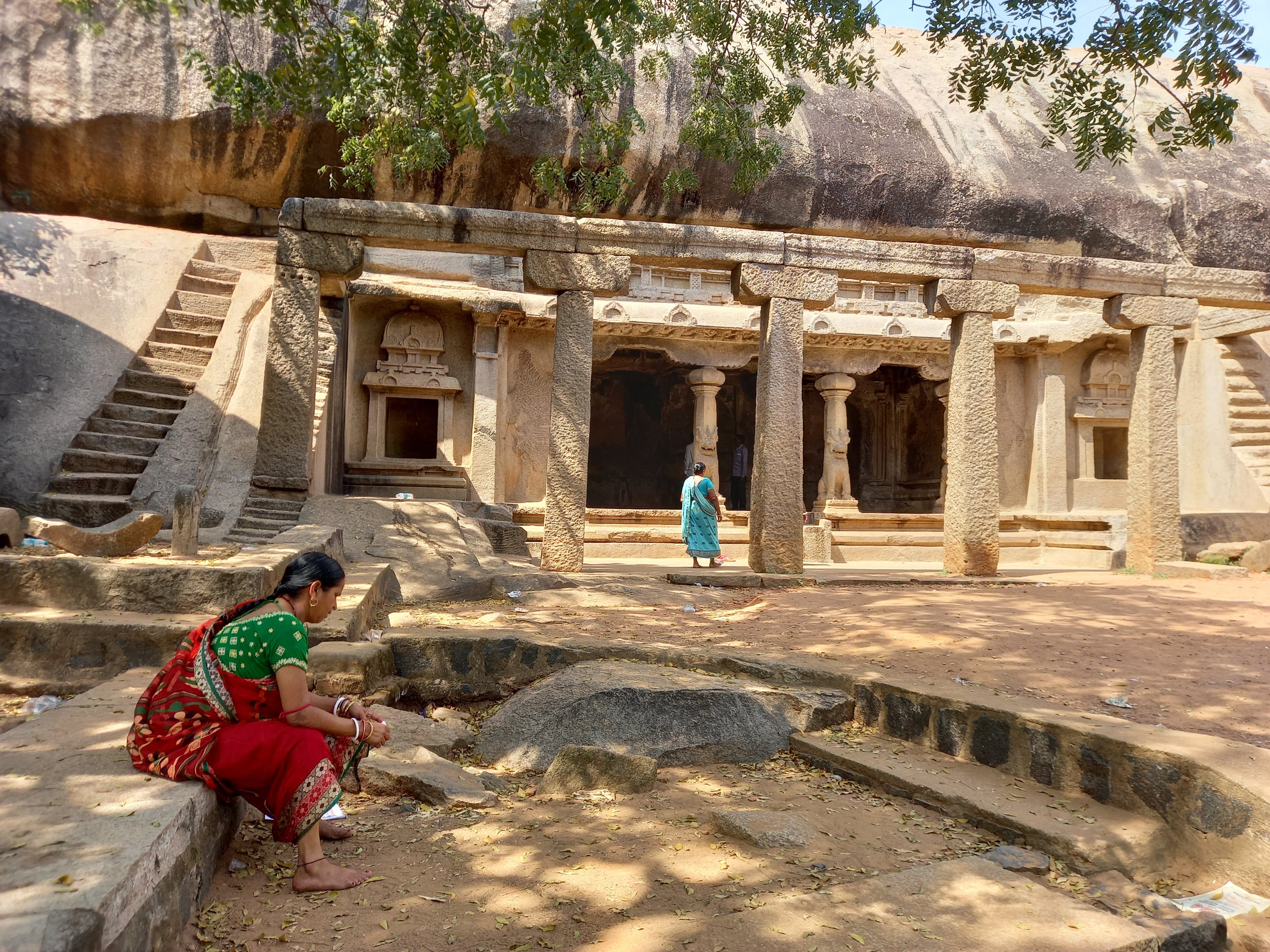
The mandapas—carved cave sanctuaries—represent the second major element of the Mahabalipuram complex. These open-air pavilions and partially roofed caves contain elaborate carved pillars, intricate reliefs, and interior shrine chambers. Each has distinct sculptural programs and represents different phases of Pallava artistic development.
Exploring the mandapas reveals the depth of Pallava rock-carving skill. The interiors often feature multiple narrative reliefs and sculptural details that require close examination to fully appreciate. This group sits slightly inland from the Shore Temple, making it a natural progression during a guided walk through the complex.
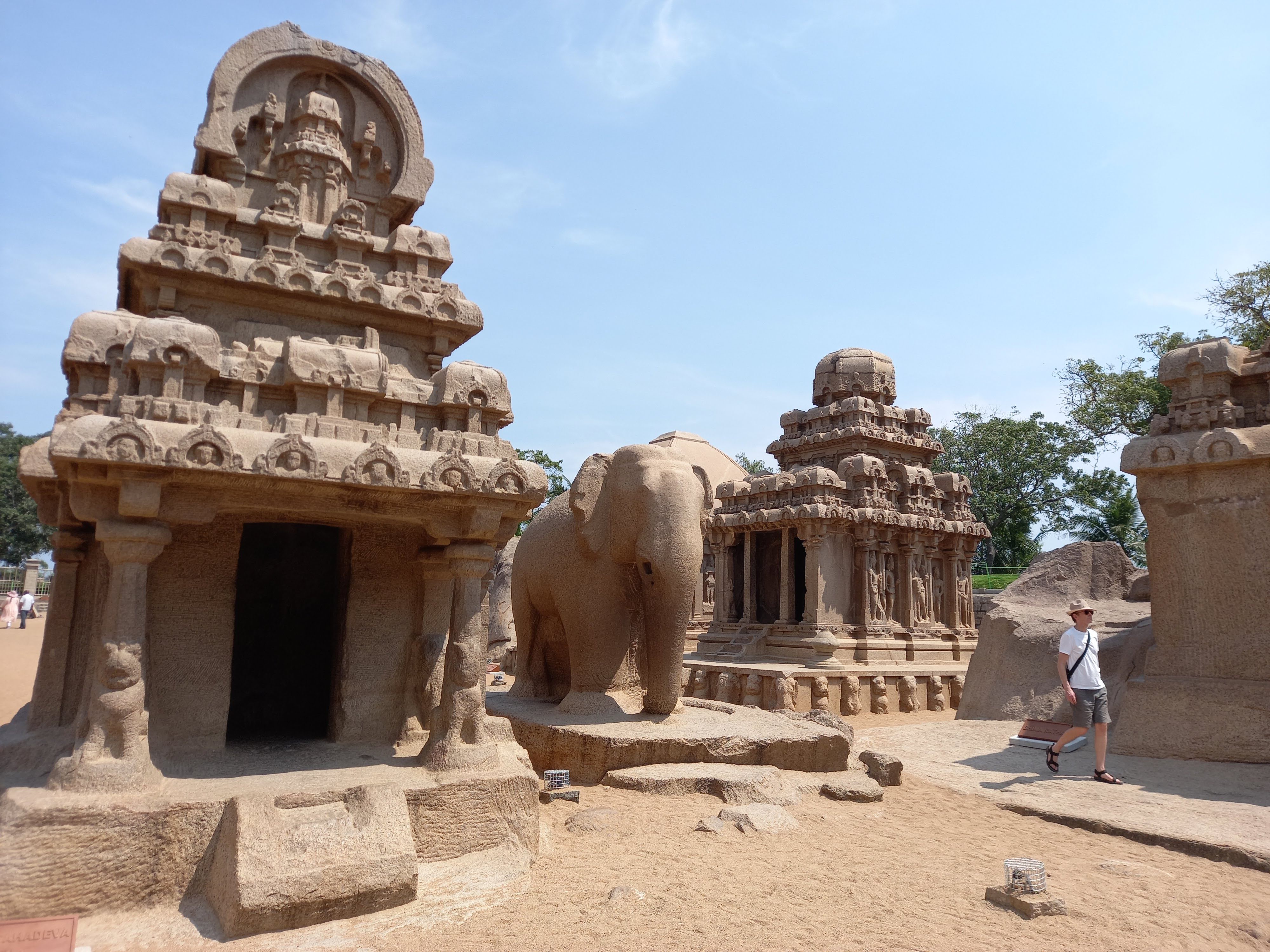
The Five Rathas are five monolithic chariot-shaped temples, each carved from a single rocky outcrop. They stand in a loose row and represent a complete spectrum of South Indian temple architectural forms, each dedicated to different deities and named after the Pandava brothers and Draupadi of the Mahabharata.
These rathas are among the most distinctive and easily recognized monuments at Mahabalipuram. Their uniform material (carved from bedrock rather than constructed from assembled stones) and deliberate spatial relationship create a visually cohesive group. Walking among them offers an exceptional opportunity to compare multiple temple prototypes side by side, a pedagogical richness that distinguishes Mahabalipuram within South Indian temple tradition.
| Step | Detail | Transport | Practical note |
|---|---|---|---|
| 1. Arrangement | Ask hotel desk to arrange private full-day taxi | Driver + car | Cost typically 40–50 EUR for 8–10 hours; negotiate total upfront before departure. |
| 2. Pickup | Hotel to Mahabalipuram (~55 km, ~90 min drive) | Private taxi | Early morning departure (7:00–8:00 a.m.) avoids peak heat and crowds. |
| 3. Shore Temple | Entry + exploration | On foot | Single ticket covers all three groups; typical entry fee ~₹600–800. |
| 4. Walk to Mandapas | Shore Temple to Cave Temples | Walking (~10–15 min) | Flat, accessible pathway; monuments are in close proximity. |
| 5. Cave Temples | Explore mandapas and interior reliefs | On foot | Allow 30–40 minutes; bring water, wear comfortable shoes. |
| 6. Walk to Rathas | Mandapas to Five Rathas | Walking (~10–15 min) | Final leg of monument tour; combined with mandapas makes a continuous walk. |
| 7. Five Rathas | Complete ratha tour + nearby ruins | On foot | Allow 30–45 minutes; most iconic photographic cluster on site. |
| 8. Return | Mahabalipuram to Chennai | Private taxi | Afternoon return (~90 min drive) completes same-day trip; typical arrival 4:00–5:00 p.m. |
Mahabalipuram is home to a vibrant local economy that operates partially outside official frameworks. Some residents have free or reduced-cost access to the monument complex and use this privilege to engage visitors as "guides," photographers, souvenir sellers, and artisans. They are extremely skilled storytellers and salespeople, adept at building rapport with travelers through elaborate narratives about each structure, offers to pose for photographs, or introductions to local sculptors and craftspeople.
This is not necessarily predatory—many genuinely enjoy sharing knowledge and facilitating cultural exchange—but the commercial objective is always present. The standard approach is persistent but good-natured: they will offer services, stories, and products with repeat suggestions if refused. A simple statement that you don't have cash available (whether literally true or a polite deflection) typically results in their immediate and courteous disengagement. Most travelers find these interactions culturally enriching rather than threatening, though having a clear boundary in mind and a respectful decline strategy helps maintain your itinerary.
Yes, absolutely. The three groups are within walking distance of each other, and a single entrance ticket covers all of them. Two to three hours of exploration is sufficient for a comprehensive visit, leaving ample time for the 90-minute drive each way from Chennai.
The Shore Temple is a freestanding sanctuary structure overlooking the ocean; mandapas are open-air pavilions and cave chambers with elaborate carvings; rathas are monolithic chariot-shaped temples each carved from a single rock outcrop. Together they showcase the full range of Pallava carving and architectural technique.
Yes. One ticket grants access to the entire Mahabalipuram complex, including Shore Temple, mandapas, and Five Rathas. Confirm this with the ticket booth upon arrival, but in practice this is standard.
Vendors are usually friendly and not aggressive. A polite, firm "thank you, no thank you" or "I don't have cash" typically results in them moving on. Many travelers enjoy the cultural exchange; just be clear about your boundaries.
Yes. This is a typical range for an 8–10 hour private car hire in India covering the 55 km each way plus several hours of on-site exploration. Hotel-arranged drivers often operate at this rate; negotiate upfront to avoid surprises.