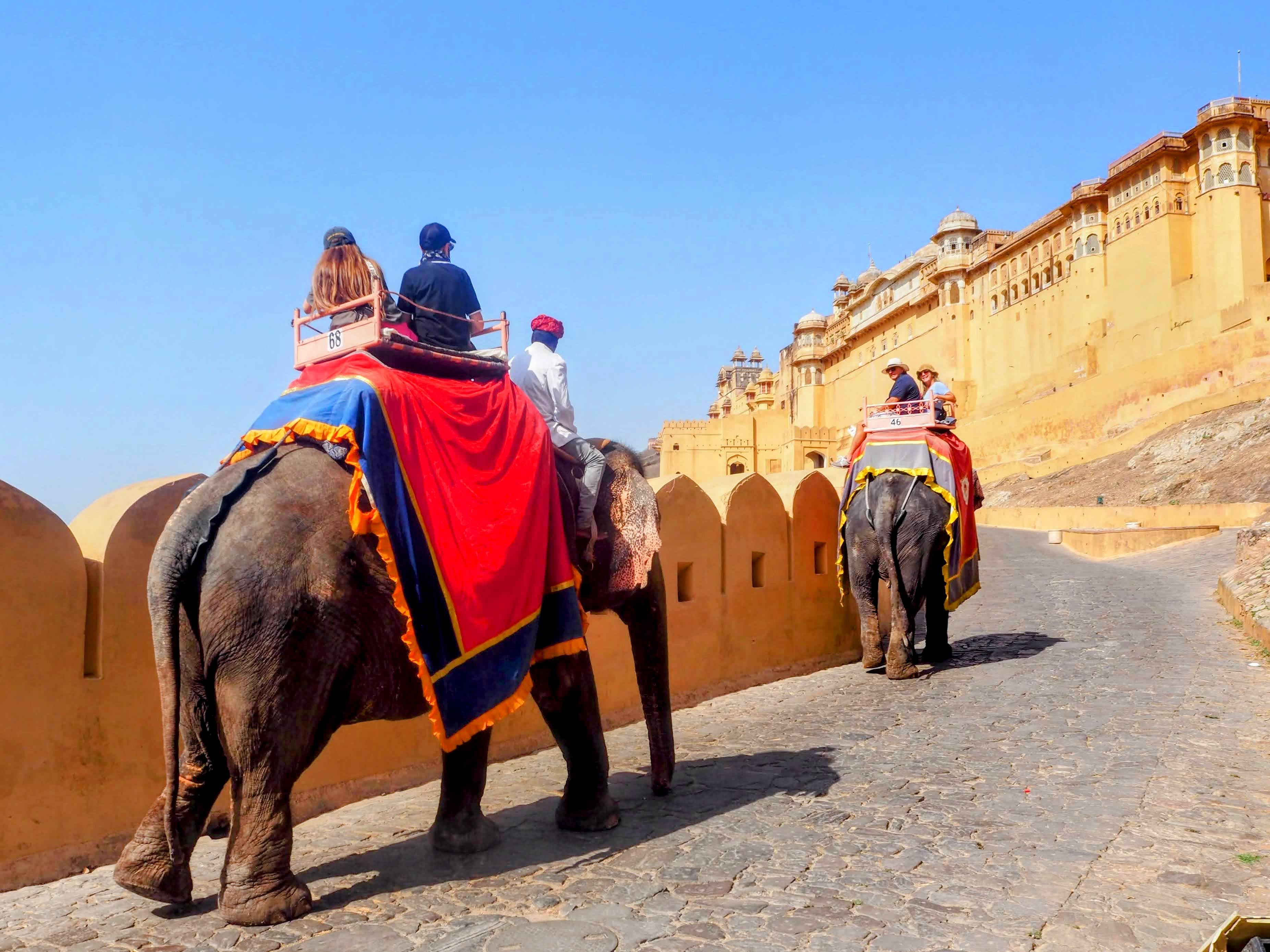
Jaipur (3 WHS)
A practical logistics guide with real costs, timings and original photos — May 2025
Jaipur is one of the rare cities where you can visit three distinct UNESCO World Heritage Sites in just two days, all accessible by cheap local transport. Here they are, in the order I visited them:
The walled city of Jaipur was founded in 1727 by Sawai Jai Singh II and is an exceptional example of a planned city following a grid layout inspired by Vedic architecture. Unlike other cities in the region built on hilly terrain, Jaipur was established on the plain and designed as a commercial capital. The city's famous pink-coloured bazaars and continuous colonnaded streets remain remarkably intact.
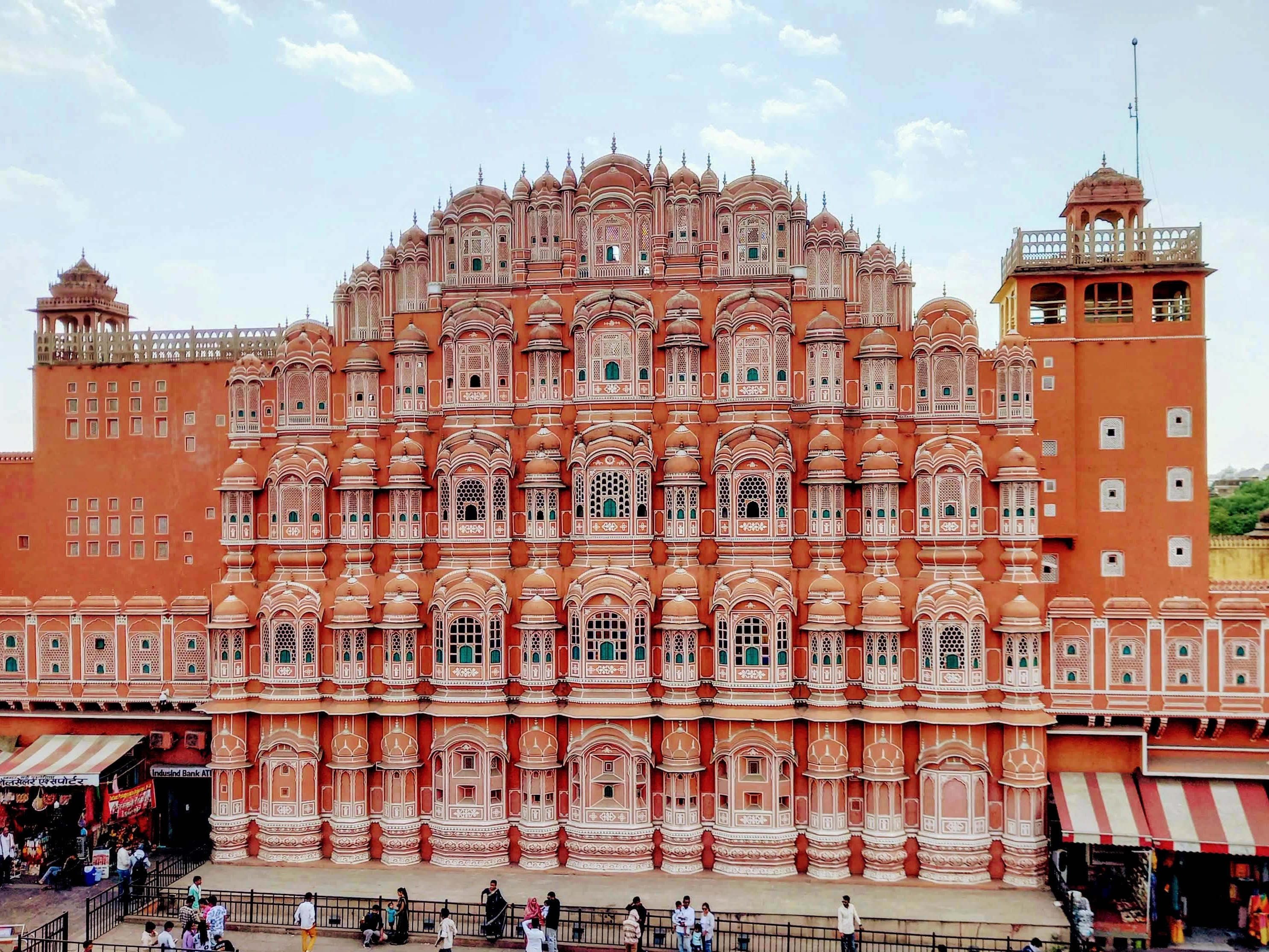
The most iconic building within the walled city is the Hawa Mahal (Palace of Winds), built in 1799 with its extraordinary honeycomb facade of 953 small windows designed to allow royal women to observe street life unseen.
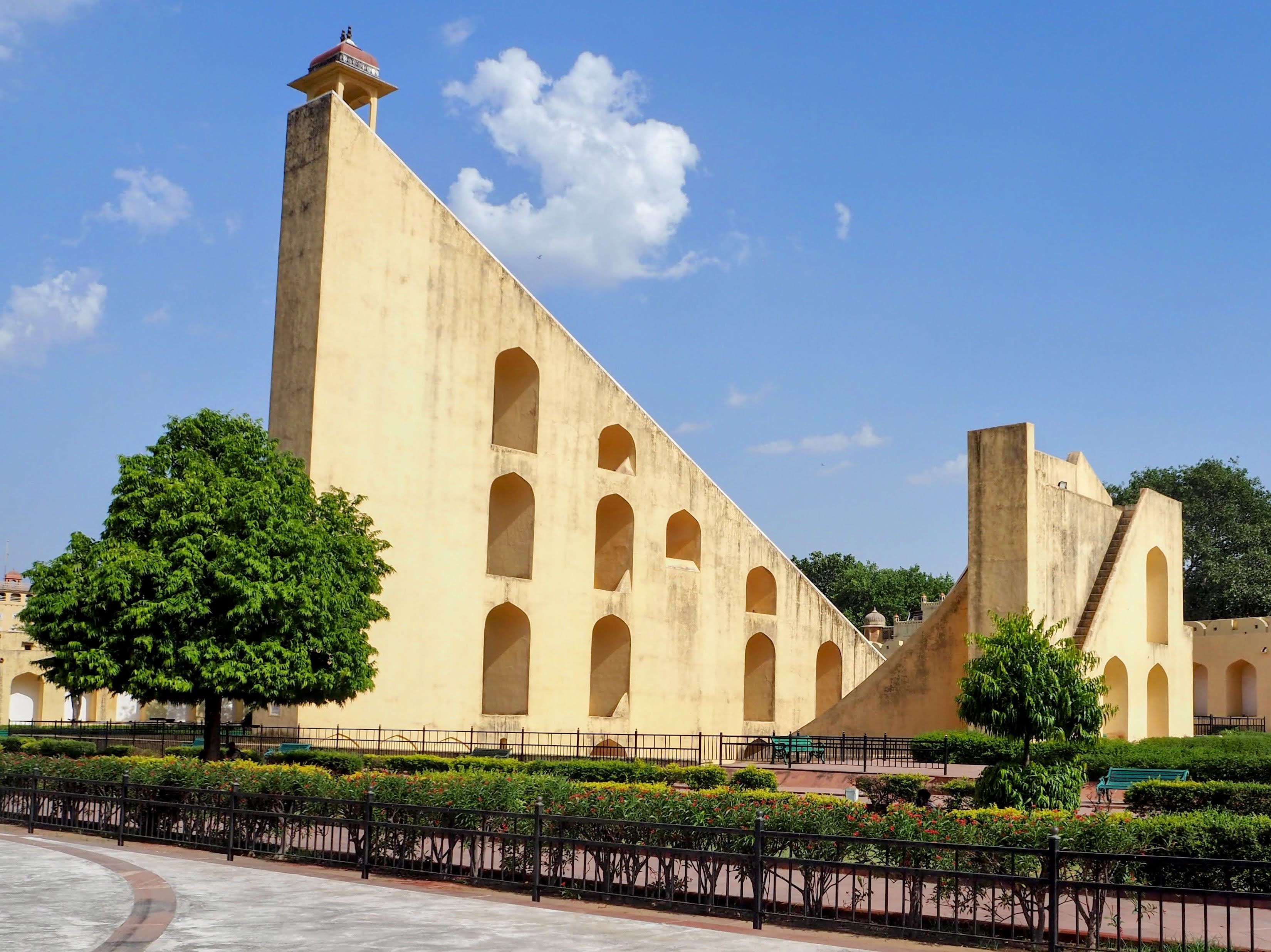
An astronomical observation site built in the early 18th century by the same Sawai Jai Singh II who founded the city. It includes some 20 main fixed instruments — monumental examples in masonry, some the largest ever built in their category. The observatory embodies the coming together of Hindu, Mughal and Western scientific traditions.
The Samrat Yantra, the world's largest stone sundial, can tell time to an accuracy of about two seconds. Walking between these massive stone instruments feels surreal — they look like abstract sculptures but are precision scientific tools from three centuries ago.
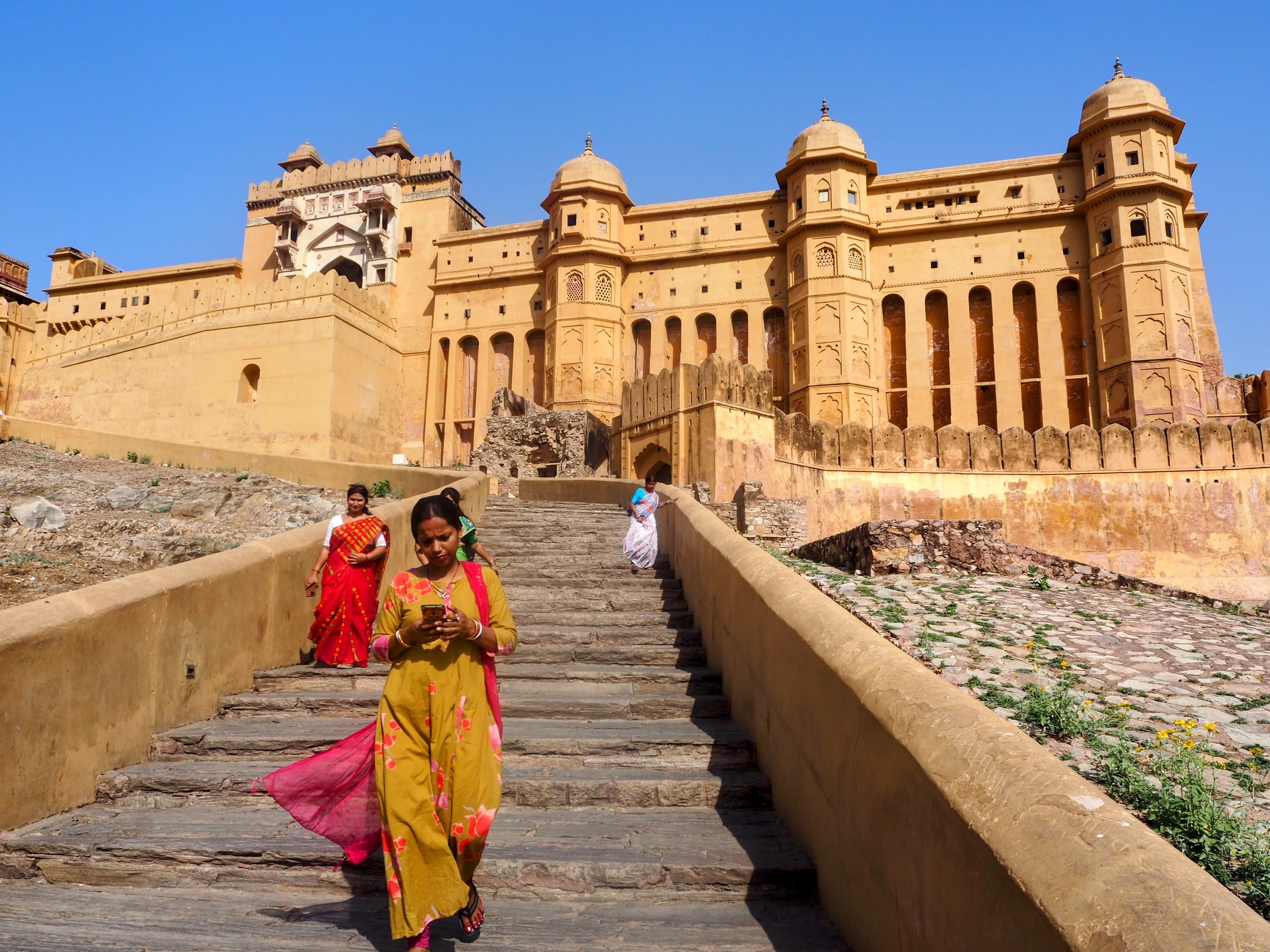
Part of the serial property "Hill Forts of Rajasthan" (which includes six forts across the state), Amber Fort is the Jaipur component. Built by Raja Man Singh I in the 17th century, it represents a key phase in the development of the Rajput-Mughal court style. The palace complex sits on a hilltop overlooking Maota Lake and is a stunning fusion of Hindu and Mughal architecture.
The fort is massive — allow at least 2–3 hours. The Sheesh Mahal (Mirror Palace) inside is extraordinary, with walls and ceilings entirely covered in tiny mirrors that were originally designed to illuminate the room with a single candle flame.
I flew from Delhi to Jaipur — it's barely a 1-hour flight and remarkably cheap. Both Air India and IndiGo operate frequent daily flights on this route. I paid approximately €50 round trip.
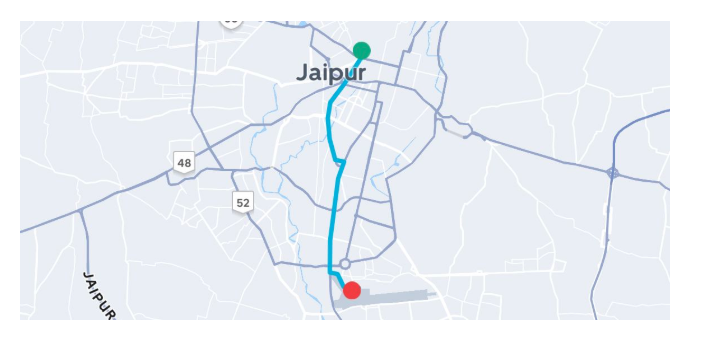
From Jaipur airport to the city centre, I took an Uber. Important: Uber works well in India but you will almost always need to pay in cash — international credit cards rarely work for payment within the app. The upside is that the price is fixed upfront in the app, so there's no need to negotiate or argue with the driver. Just have Indian rupees ready.
The ride data:
| Route | Distance | Duration | Cost | Method |
|---|---|---|---|---|
| Airport → City Centre | 15 km | 42 min | ₹295 (~€3.20) | Uber |
I stayed at Hotel Bissau Palace, a heritage property in the heart of the old city that puts you within walking distance of both Hawa Mahal and Jantar Mantar.
If you want to do all three UNESCO sites in one day, this is the right place to start. I booked an auto-rickshaw through Uber to reach Amber Fort — the cheapest and most authentic way to get there.
| Route | Distance | Duration | Cost | Method |
|---|---|---|---|---|
| City Centre → Amber Fort | 9 km | 23 min | ₹100 (~€1.10) | Uber Rickshaw |
The fort is massive. The approach up the hillside is impressive in itself — the stone steps ascending toward the honey-coloured sandstone walls feel cinematic. Inside, don't miss the Sheesh Mahal, the Diwan-e-Aam, and the views across Maota Lake.
Tip: Arrive early (by 8:30 AM if possible) to beat the tour groups and the worst of the heat. The light on the sandstone at that hour is magnificent.
Both of these sites are within easy walking distance of Amber Fort — no taxi or rickshaw needed. After visiting the fort, just walk down and follow the signs. They are not UNESCO-listed but absolutely worth the detour:
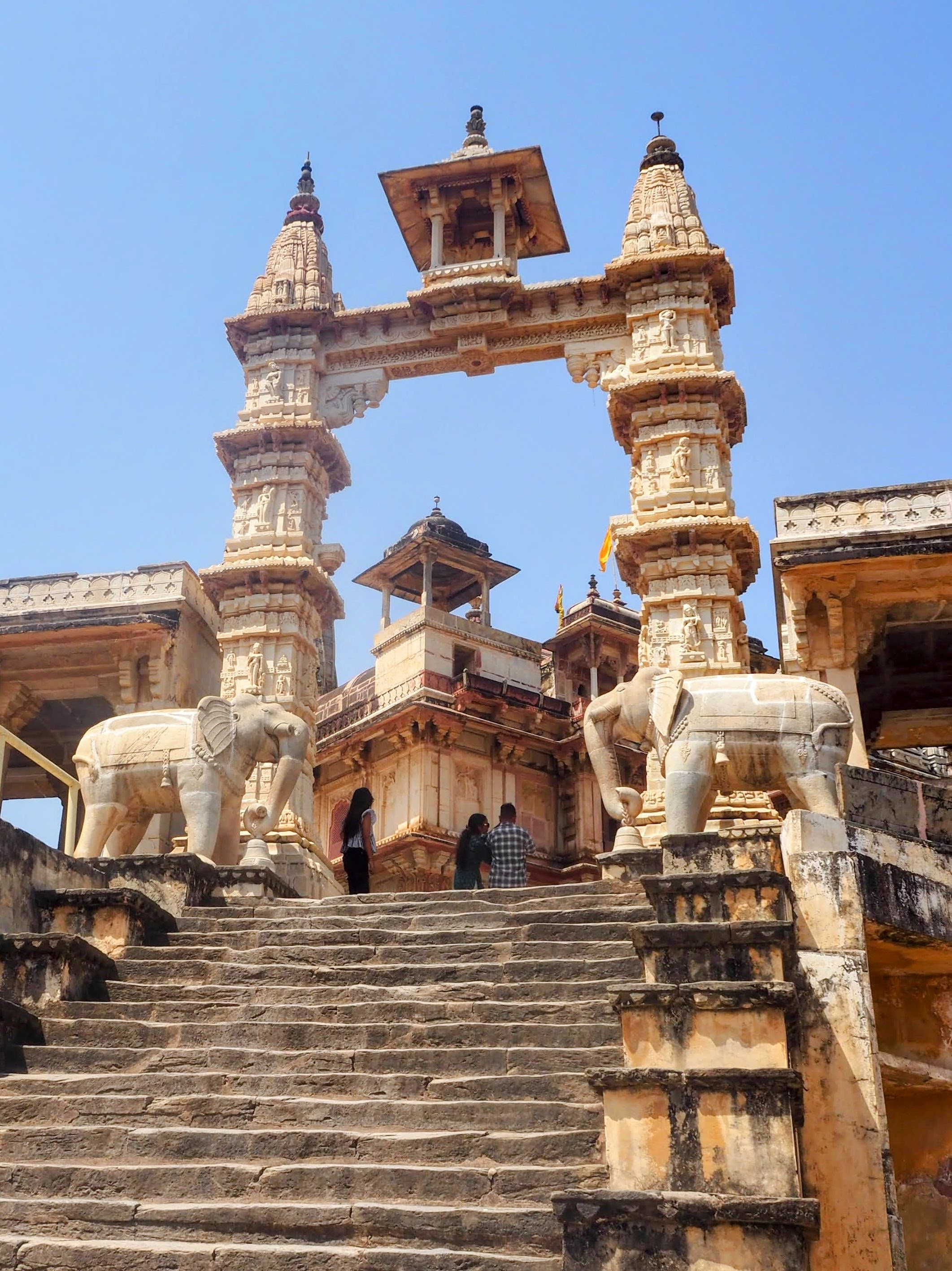
A beautiful Hindu temple just below Amber Fort, dating from the early 17th century. It's roughly a 10-minute walk downhill from the fort's main gate. The carved elephant sculptures flanking the entrance are remarkable — detailed stonework depicting elephants, riders and battle scenes. The temple is dedicated to Krishna and Meera Bai. It's quiet, barely visited, and deeply atmospheric.
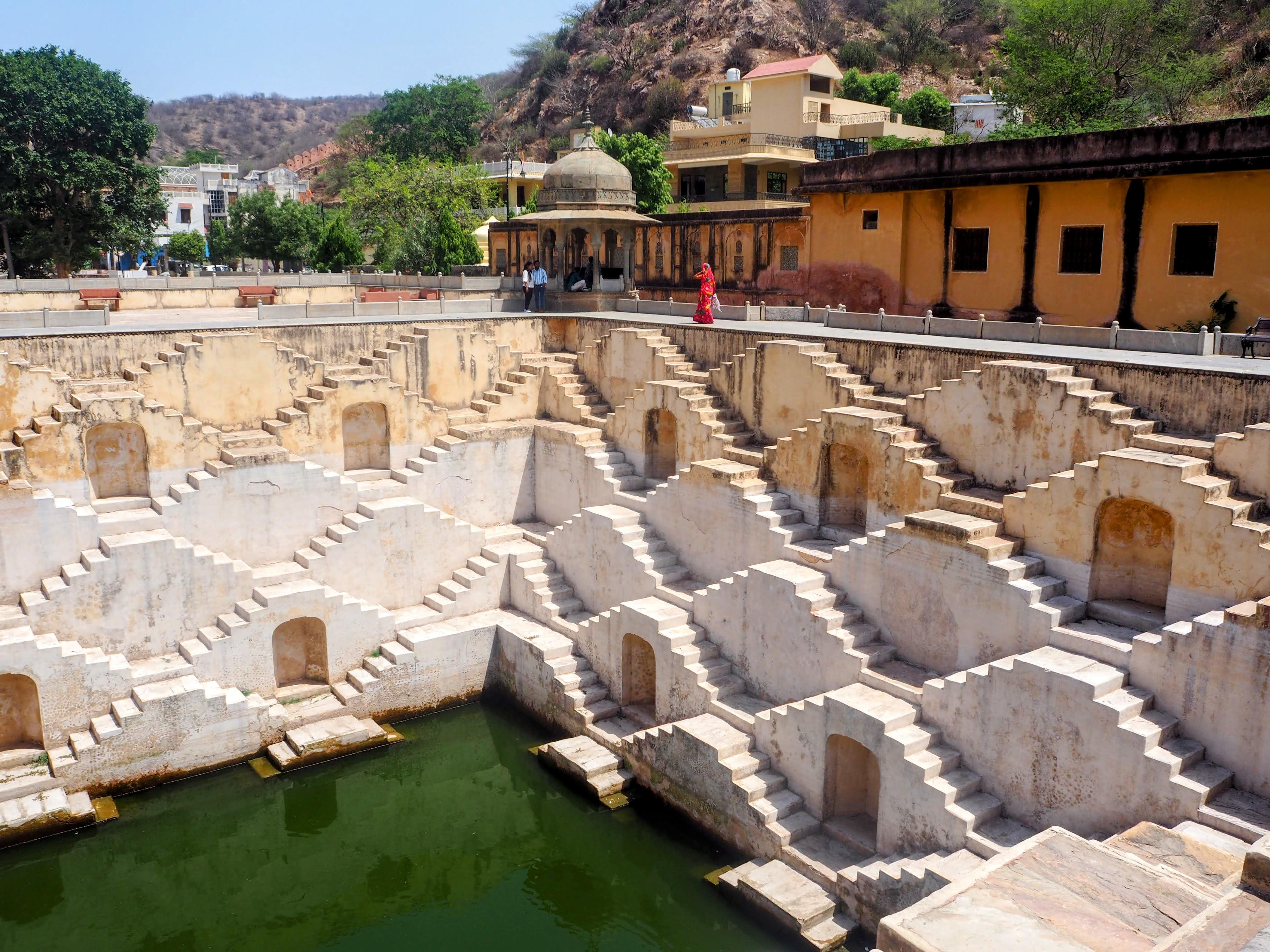
This spectacular geometric stepwell has become famous on Instagram, and for good reason — the criss-crossing zigzag staircases create a mesmerizing symmetrical pattern. Built in the 16th century, it was designed to harvest rainwater. It's about a 5-minute walk from Amber Fort, or just a couple of minutes from the Jagat Shiromani Temple. Best photographed in the morning light.
Return to the old city after lunch and continue with Hawa Mahal. The facade is most photogenic in the morning or late afternoon light, so this order still works well for a one-day route. In person it is genuinely breathtaking — photos don't do justice to the scale and intricacy of the 953 jharokha windows.
Tip: The best photos of the facade are taken from the Hawa Mahal Café directly across the street — order a chai and shoot from the rooftop terrace.
Walk from Hawa Mahal to Jantar Mantar — it's barely 400 metres south, just past the City Palace entrance. Give yourself at least an hour here; the instruments are fascinating and the audio guide is worth taking. The Samrat Yantra (the 27-metre-tall sundial) is extraordinary.
Tip: This is one of the reasons the one-day route works better in this order: visiting after 3 PM helps you avoid the worst heat and gives the instruments their most dramatic shadows.
| Route | Distance | Duration | Cost | Method |
|---|---|---|---|---|
| City Centre → Airport | 13.7 km | 36 min | ₹280 (~€3.05) | Uber |
Yes, it's feasible in one day if you start early and move efficiently: Amber Fort first thing in the morning, then Jagat Shiromani Temple and Panna Meena ka Kund on foot, and finally Hawa Mahal plus Jantar Mantar in the afternoon back in the walled city. I personally did it over two days for a slower pace and better light for photos.
Yes. I used Uber for all three rides without issues. The app works on Indian SIM/eSIM and prices are fixed upfront — but you'll need to pay in cash (Indian rupees). International credit cards rarely work within the Uber India app. The good news: since the fare is locked before the ride, there's zero haggling. Auto-rickshaw option through Uber is the cheapest (and most fun). Ola is also available as an alternative.
October to March is ideal — comfortable temperatures (15–30°C) and dry weather. I visited in May (40°C+), which is doable but demanding. Avoid July–September (monsoon season) unless you enjoy occasional torrential rain.
No. All three sites are well-signposted and easy to navigate. Jantar Mantar has an excellent audio guide available at the entrance (₹150) that explains each instrument clearly. For Amber Fort, free maps are provided at the ticket counter.
Hawa Mahal and Jantar Mantar are largely accessible on the ground level. Amber Fort is not wheelchair-friendly — the approach involves steep stone steps and uneven surfaces throughout the complex.