EPHESUS FROM KUSADASI
A straightforward cruise-port visit: enter at the upper gate, walk downhill through the ancient city, and finish at the Temple of Artemis
Ephesus was one of the great cities of the ancient Mediterranean. Its earliest settlement goes back to the 10th century BCE, while the city became a major Ionian and later Hellenistic centre. Under Roman rule it grew into the capital of the province of Asia and a large port city, reaching its greatest scale during the 1st and 2nd centuries CE.
The ruins seen today combine Greek, Hellenistic, Roman, and early Christian layers. The marble processional streets, public buildings, theatres, baths, and libraries make Ephesus unusually legible: this is not just a collection of isolated ruins, but the remains of a city arranged around civic life, trade, religion, and imperial power.
The usual visitor flow begins at the upper gate and continues downhill for less than 2 km to the lower gate. Marble paving can become slippery, especially when worn smooth or wet, so comfortable shoes with good grip are more useful than formal footwear.
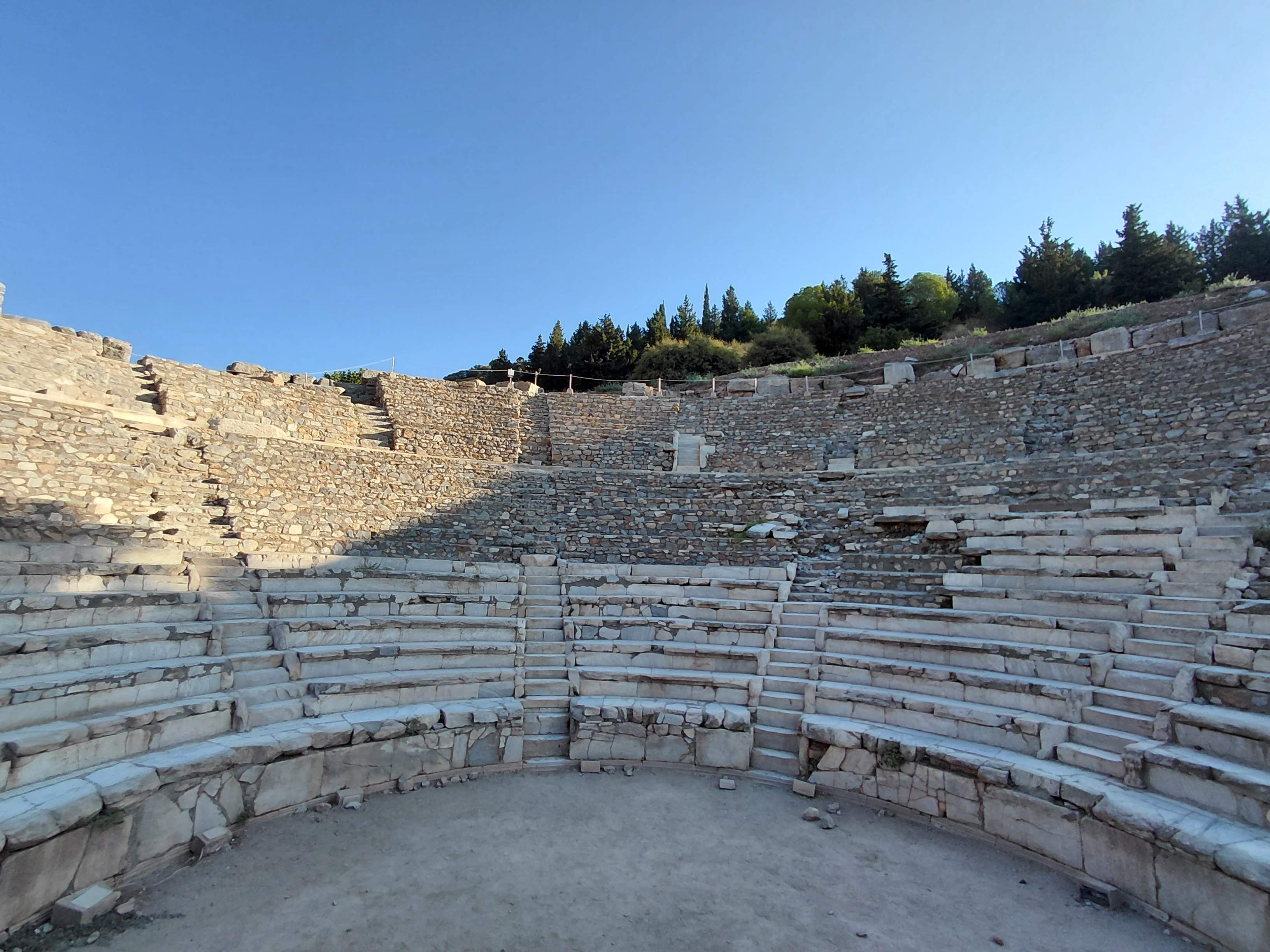
The Odeon was a small, covered theatre used for musical performances, readings, and meetings of the city's council. Built in the early 2nd century CE, it held roughly 1,500 spectators and stood near the civic centre. Its intimate scale contrasts with the much larger theatre farther down the city.
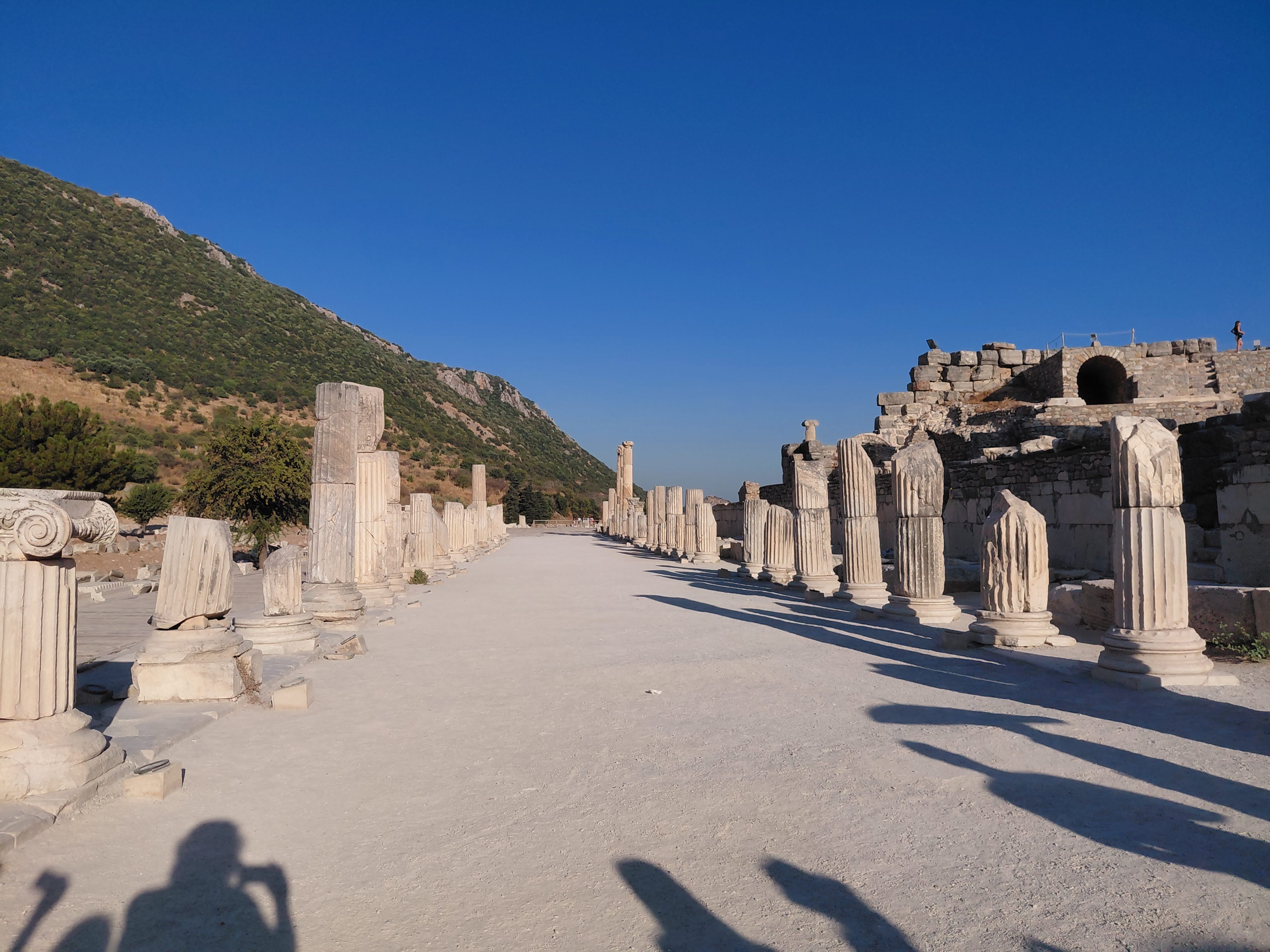
The Basilica Stoa stood beside the State Agora and formed part of Ephesus's civic and commercial heart. A stoa was a long, roofed colonnade: it provided shade, shelter, and a setting for public movement and discussion. The basilica attached to this area also had administrative and judicial functions, showing how closely everyday business was tied to the city's political life.
Built at the end of the 1st century CE, the Temple of Domitian was dedicated to the emperor Domitian, who ruled from 81 to 96 CE. Its elevated position near the State Agora made it a conspicuous part of the imperial city. After Domitian's assassination and condemnation of his memory, the building's identity was altered, a reminder that monuments also reflected changing political fortunes.
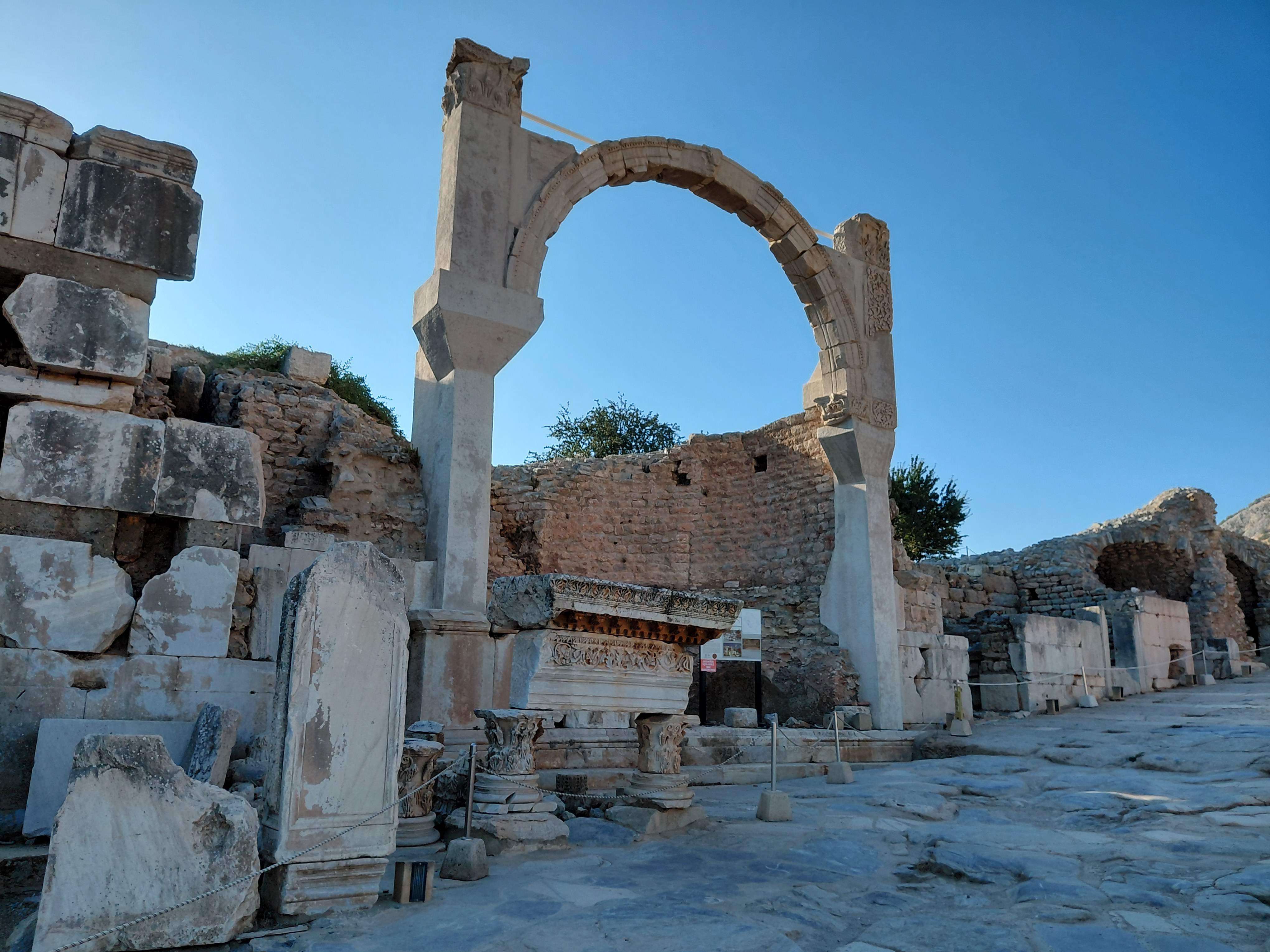
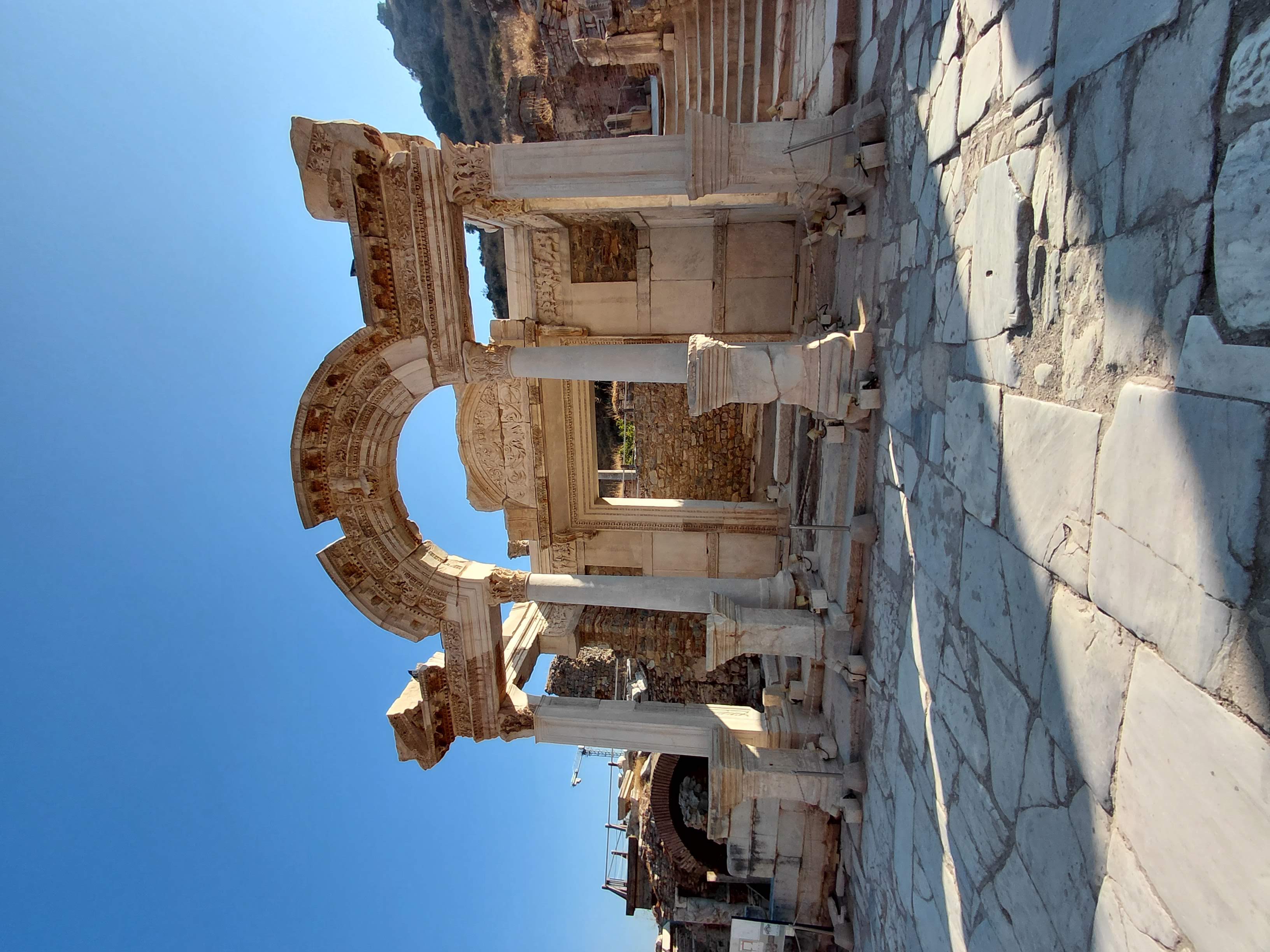
The Temple of Hadrian dates to the 2nd century CE and honoured the emperor Hadrian, who visited Ephesus in 129 CE. Its surviving facade is especially elegant, with a curved pediment, ornate capitals, and relief decoration. The temple stood along Curetes Street, one of the city's principal ceremonial roads.
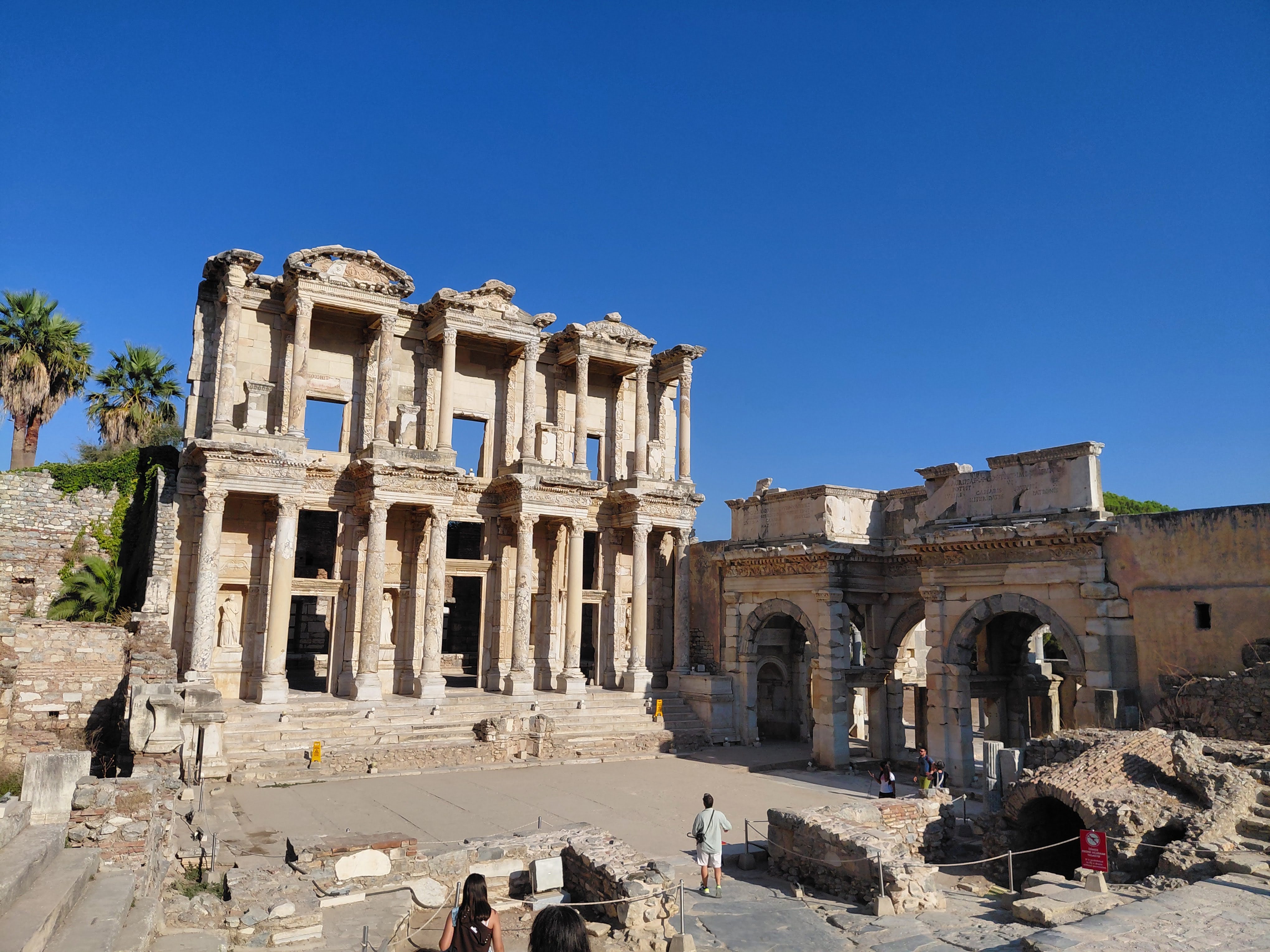
The Library of Celsus was completed around 117 CE as a monument to Tiberius Julius Celsus Polemaeanus, a wealthy Roman senator and governor of Asia. His son commissioned the building as both a library and a funerary monument. The reconstructed facade, with its paired columns and statues, is Ephesus's best-known view and one of the most recognisable architectural remains of Roman Asia.
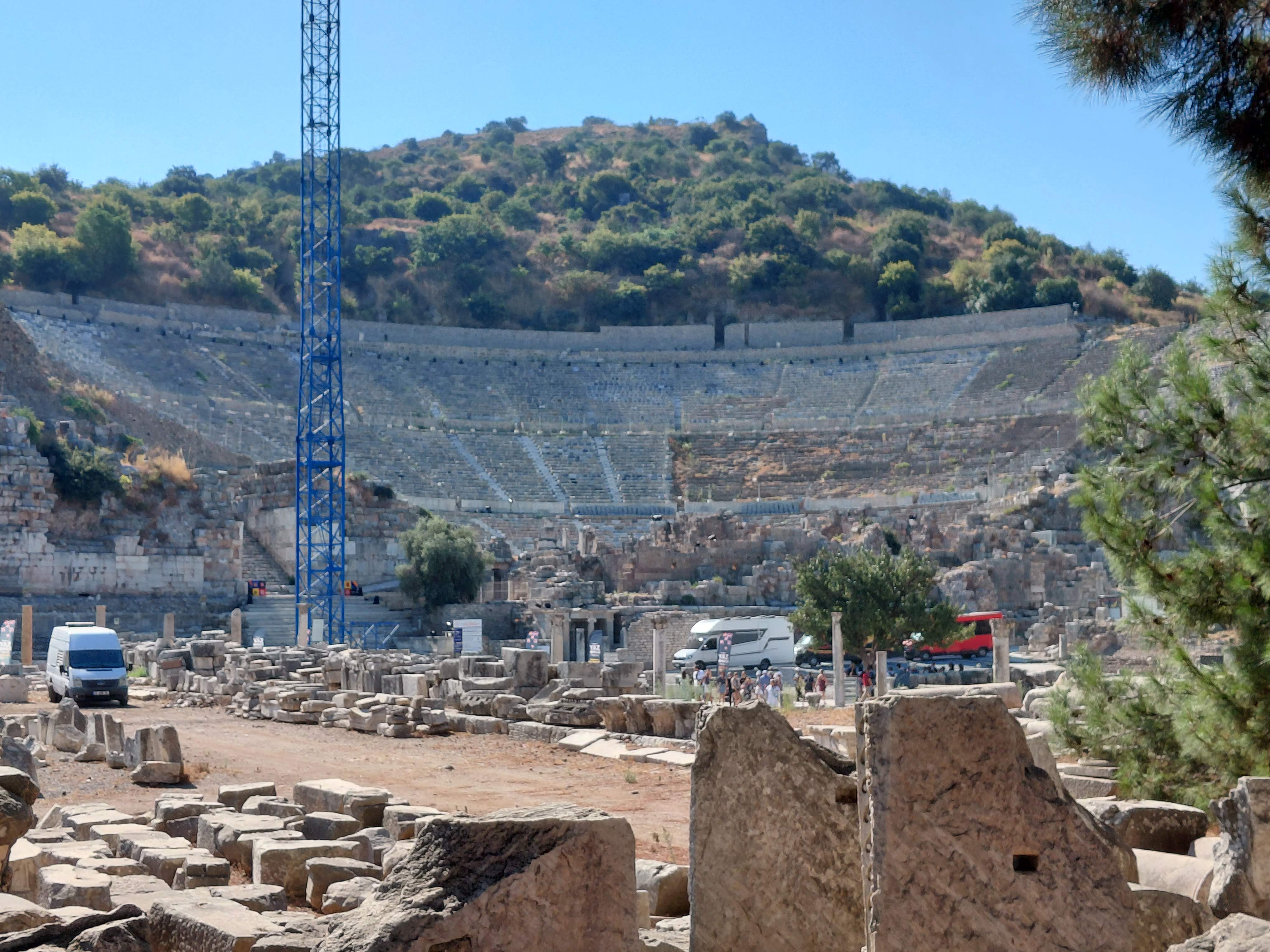
The Great Theatre is the enormous open-air theatre on the slope of Mount Pion. Developed from the Hellenistic period and enlarged under Roman rule, it could accommodate tens of thousands of people. It hosted performances, public assemblies, and spectacles. Restoration and conservation work can affect access, so some areas may be closed during a visit.
The simplest arrangement is a pre-booked car or driver who knows the cruise-port routine. My GetYourGuide driver cost about EUR 20, waited for me at Kusadasi port, and covered the roughly half-hour drive to Ephesus. Public transport is possible, but the journey may involve up to three buses and can consume a large part of a port day.
| Stage | Approximate time | Mode | Practical note |
|---|---|---|---|
| Kusadasi port to Ephesus | ~30 minutes | Pre-booked car | A direct transfer preserves the limited time of a cruise stop. |
| Upper gate to lower gate | 2–3 hours | Walking downhill | Allow time for monuments, photographs, and careful footing on marble. |
| Lower gate to Temple of Artemis | ~10 minutes | Short car transfer | The sanctuary is close enough for a brief final stop. |
| Temple of Artemis to port | Allow a generous buffer | Car | Return according to the ship's all-aboard time, not the site's closing time. |
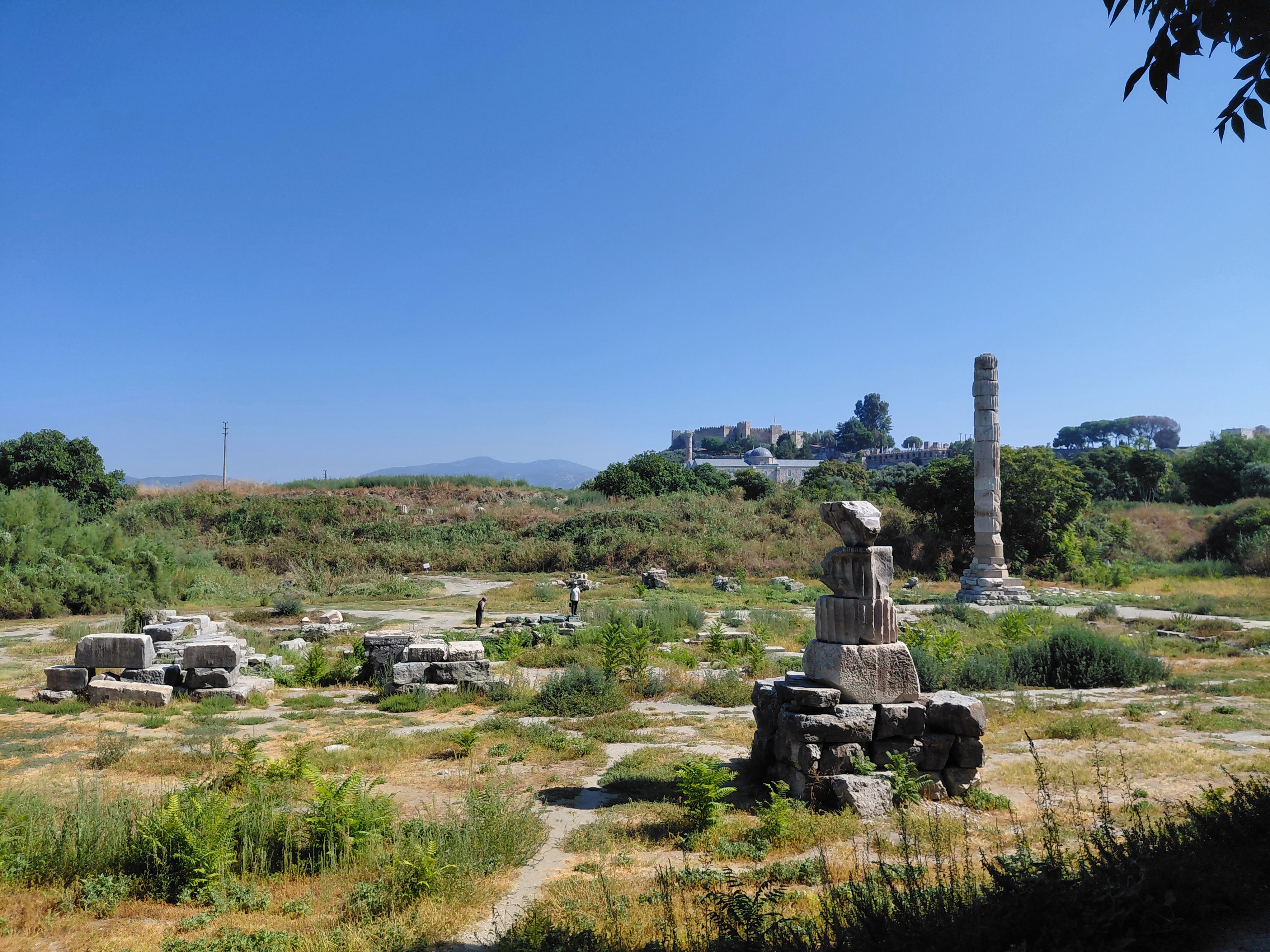
After leaving Ephesus through the lower gate, the Temple of Artemis is an easy additional stop. The sanctuary was one of the Seven Wonders of the Ancient World and was associated with the Ephesian form of Artemis, a major local deity. Several temples occupied the site over time; the most famous phases were built and rebuilt from the 6th century BCE onward.
Today, very little survives above ground: the most obvious feature is a reconstructed column standing in the marshy archaeological area. It is not a second Ephesus-scale visit. Ten minutes is enough for a photograph and a sense of the site's location, particularly when the stop completes a cruise-port itinerary without putting the ship return at risk.
On this visit, no passport was required when leaving the ship or returning to it. Cruise-line and port procedures can change, so carry the identification and ship card required by your operator and follow its instructions.
Yes, but it can require up to three buses and take much longer than a direct car. For a cruise stop, a pre-booked transfer is usually the more practical choice.
The standard upper-gate to lower-gate route is barely 2 km and descends through the principal ruins. The distance is modest, but allow two to three hours for the monuments, photos, and cautious walking.
It is worthwhile as a short historical add-on, especially because it is close to the lower gate. Very little remains, so a 10-minute photo stop is usually sufficient.