Seoul (3WHS)
A practical route by subway: Jongmyo, Changdeokgung and Seonjeongneung
Seoul is remarkable for having three distinct UNESCO World Heritage Sites accessible in a single day by foot and subway. Each represents a different facet of Joseon dynasty heritage — ritual, architecture and landscape.
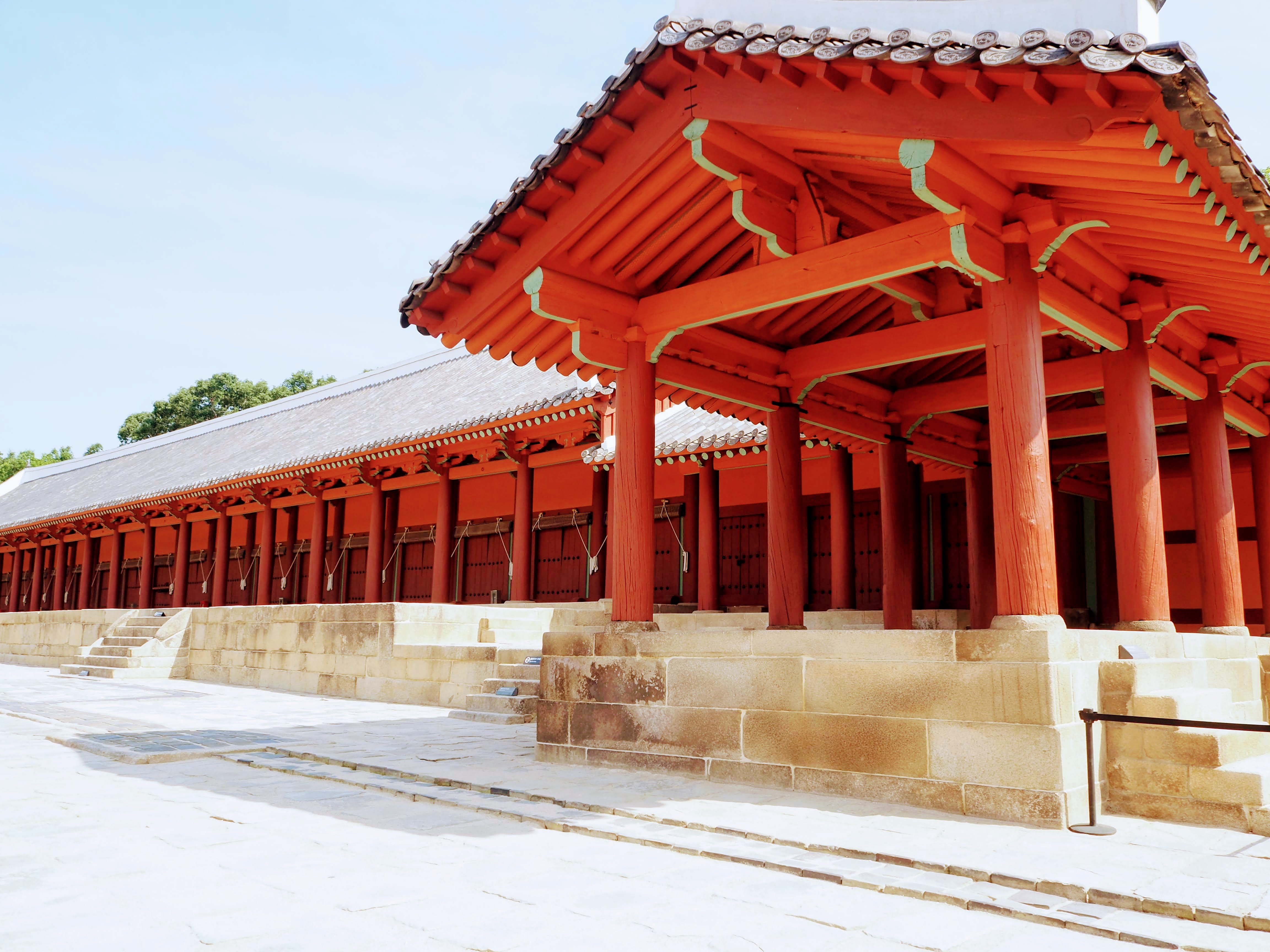
Jongmyo is the royal ancestral shrine of the Joseon dynasty, a place of profound quietude in the heart of downtown Seoul. It functions as a repository for the spirit tablets of Korean kings and queens, and the ceremonial traditions performed here — some unchanged for centuries — are still maintained and observed today. The shrine is deceptively simple in appearance: long wooden halls with wooden columns, polished floors, and an almost meditative emptiness.
What struck me most was the sense of reverence the space commands, even from modern visitors. There is no grand decoration or tourist theatre here — just centuries of ritual and remembrance. Allow about an hour to walk the main ceremonial axis and understand the spatial logic. Nearest station: Jongno 3-ga (Lines 1, 3, 5). Entry: KRW 1,000.
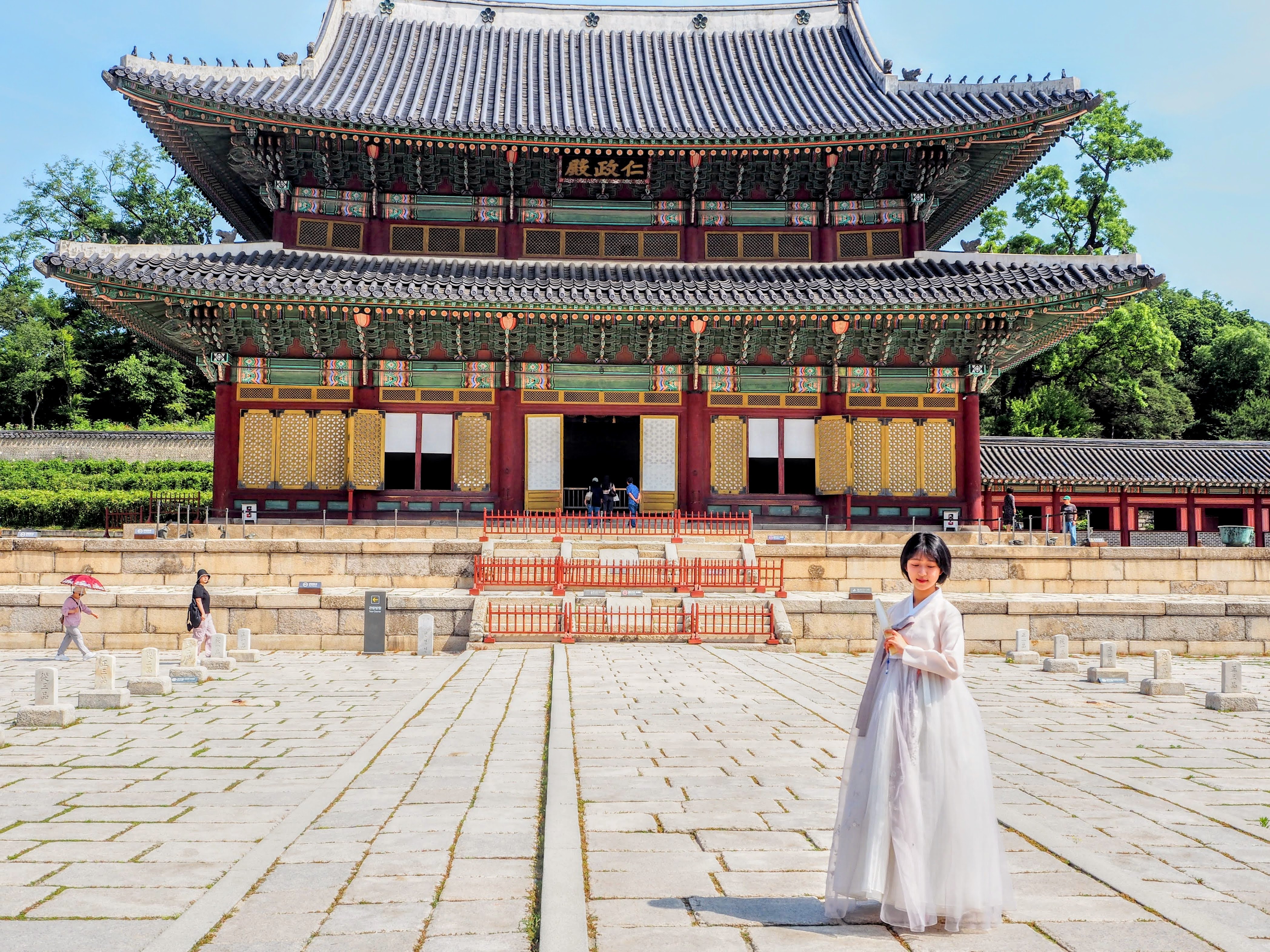
From Jongmyo, it's an easy 10–15 minute walk north to Changdeokgung, the second most important palace in Joseon history. What makes Changdeokgung UNESCO-listed, rather than its more famous neighbour Gyeongbokgung, is something more subtle: the integration of the palace architecture with natural landscape. Rather than imposing a formal grid over the terrain, Changdeokgung allows the palace to flow with the topography — gardens merge with hills, pavilions nestle against rock. The effect is one of organic harmony.
The palace compound is large and inviting for exploration — plan 1.5 to 2 hours. Don't miss the Biwon garden (Secret Garden), one of the finest examples of Joseon landscape design, with ponds, pavilions and ancient trees. Changgyeonggung, an adjacent palace, can be visited on the same ticket at minimal extra distance. Entry: KRW 3,000.
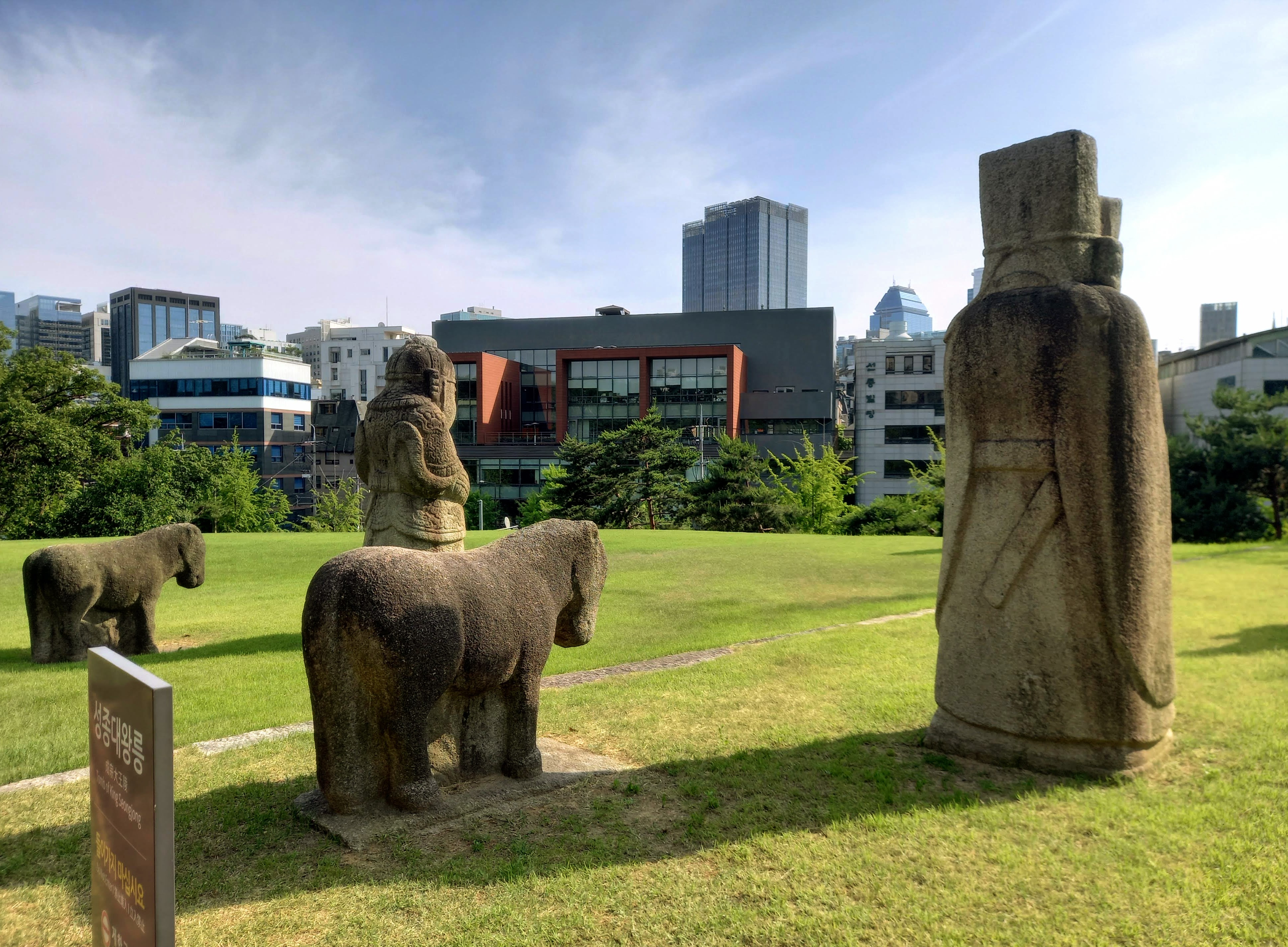
After lunch in the Jongno area, take the subway south to Seolleung Station (Line 2) to reach the Joseon royal tomb landscape. I visited Seolleung and Jeongneung, twin tombs in a green forested park surrounded by modern Seoul — a strange and poignant contrast. The tombs themselves are serene: grass mounds beneath ancient trees, marked with stone tablets and guardian statues. There is virtually no tourism infrastructure here, which makes the site feel more authentic and intimate than busier historical attractions.
The Royal Tombs inscribed on the UNESCO list represent a series of burial grounds spread across the Seoul region, reflecting Confucian principles of royal burial. Seonjeongneung in particular shows the landscape reverence of the Joseon court — the placement of tombs is not arbitrary but follows geomantic principles (pungsu), considering mountains, water and celestial orientation. Entry: KRW 1,000. Plan 1 hour here.
| Leg | Mode | Time | Approx. Cost |
|---|---|---|---|
| Jongmyo Shrine | On foot from Jongno area | ~1 h visit | KRW 1,000 entry |
| Jongmyo → Changdeokgung | Walk | 10–15 min | Free transfer |
| Changdeokgung visit | On foot | 1.5–2 h | KRW 3,000 entry |
| Anguk/Jongno area → Seolleung | Subway | 30–40 min | ~KRW 1,400–1,600 fare |
| Seonjeongneung visit | On foot | 1 h | KRW 1,000 entry |
I started at Jongmyo, walked to Changdeokgung, had lunch in the area, then took the metro to Seonjeongneung for the final UNESCO stop. The sequence is efficient and avoids backtracking.
Even in hyper-modern Seoul, metro ticket machines and card top-ups often require cash. Carry small KRW bills or coins. Do Jongmyo and Changdeokgung first since they are close enough to combine before lunch, then take the subway south for Seonjeongneung. Palace and shrine weekly closing days can differ, so verify official schedules before planning. Entry fees (KRW 1,000–3,000) are typically low but can change by policy.
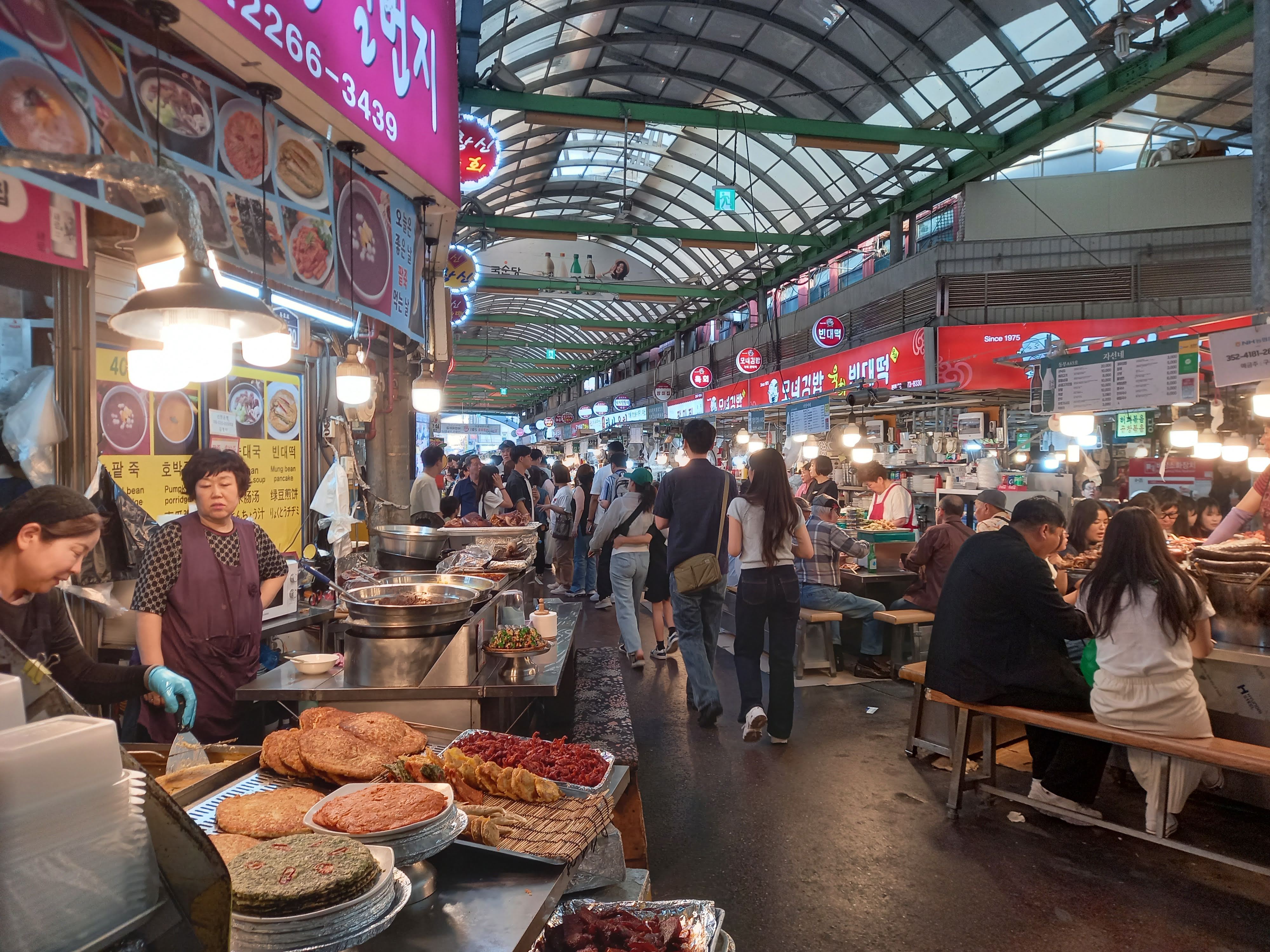
After completing the UNESCO circuit, I ended the day at Namdaemun Market (37.561143, 126.978052). It was a perfect finish: lively alleys, quick service, and classic Korean market food in a very local atmosphere.
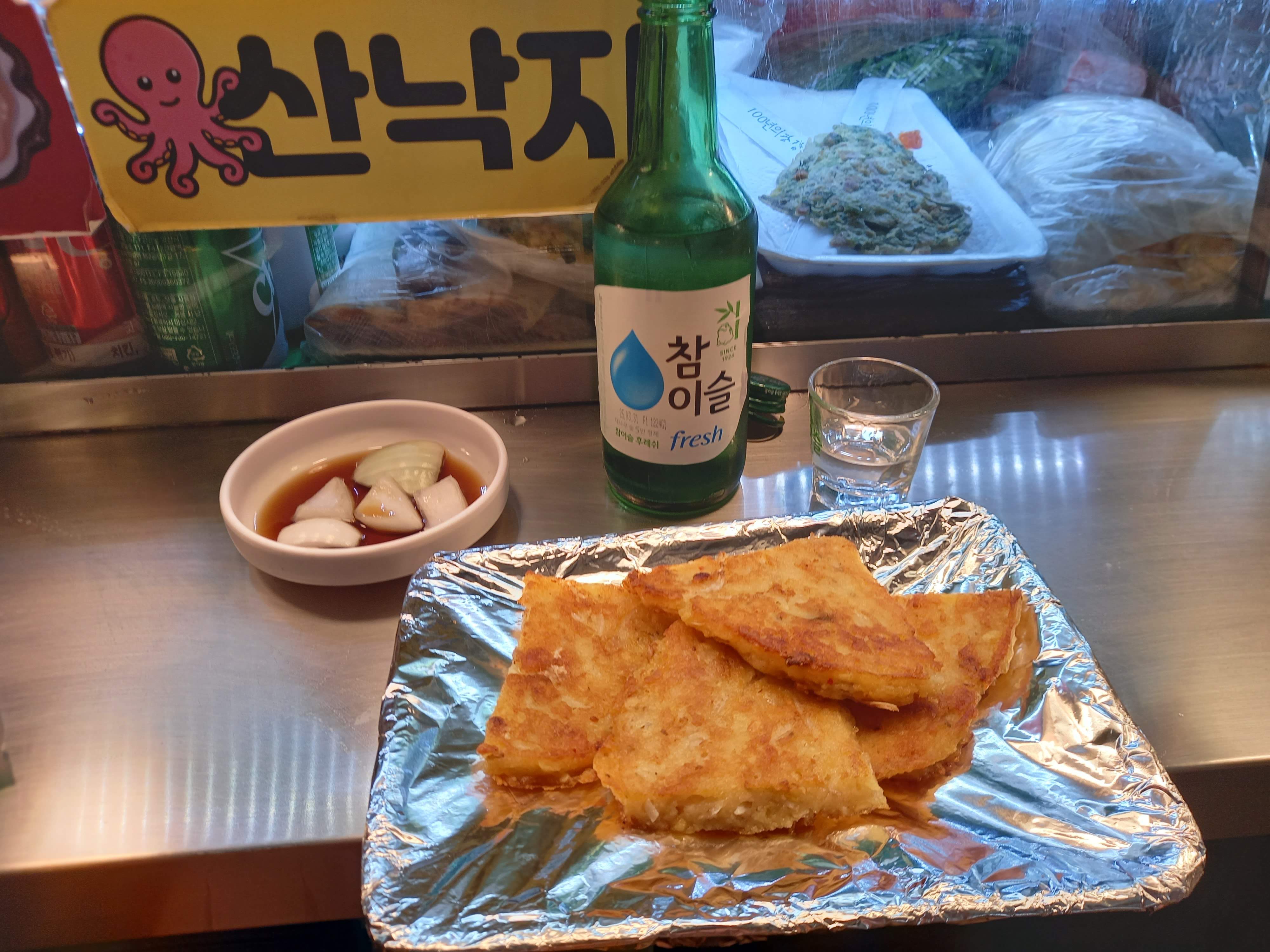
I had traditional Korean bindaetteok (mung bean pancakes), served with soy-sauce marinated onions and accompanied by Korean soju. The pancakes were crisp outside, soft inside, and very satisfying after a full day of walking and metro transfers.
I also visited the other major palaces in Seoul. The five are: Gyeongbokgung, Changdeokgung, Changgyeonggung, Deoksugung and Gyeonghuigung. The most visited (and most crowded) is Gyeongbokgung. Palace entry policies can vary by day/event, and there are often free-entry windows (for example, holidays) or cultural exceptions such as discounts for traditional dress.
Yes, absolutely. Start at Jongmyo mid-morning, walk to Changdeokgung for late morning/early afternoon, have lunch, then subway south to Seonjeongneung for the afternoon. All three are doable in roughly 6–7 hours of active visiting. I recommend this itinerary for efficient subway transfers and minimizing backtracking.
Extremely reliable — among the world's best. Trains run every 3–5 minutes on major lines, are clean, air-conditioned, and on time. The system is well-signposted in English. Single-journey tickets cost roughly KRW 1,400–1,600 depending on distance. Important: You must pay with cash at machines or load a T-money card — international credit cards don't work. ATMs in the subway accept foreign cards.
Limited. Jongmyo has minimal English signage — focus on the main ceremonial axis if you can't read Korean. Changdeokgung has reasonable English maps and some signage. Seonjeongneung is quieter and has basic English labels. Many palaces offer audio guides in English — highly recommended at Changdeokgung. Download offline maps in advance.
September–October (autumn) is ideal — clear skies, comfortable temperatures (15–20°C) and beautiful colours in the palace gardens. Spring (March–May) is crowded but visually stunning. Avoid December–February (cold, grey) and July–August (humid, hot, occasional rain). Avoid national holidays when sites get extremely crowded.
No. All three sites are straightforward to navigate independently. Changdeokgung and Jongmyo have English maps at the entrance. Audio guides (available for rental) are worth it at Changdeokgung if you want historical context. Jongmyo and Seonjeongneung are simple enough to explore on your own — get a map and wander.
Changdeokgung has partial ground-level access to some areas. Jongmyo is mostly flat and walkable for mobility-limited visitors. Seonjeongneung has mostly paved paths. However, none of the sites are fully wheelchair-friendly — stairs, uneven surfaces and steep inclines are common. Check with each site's accessibility office if you have specific mobility requirements.